Overview: the whole model on one page
SafeClaw gives an agent the use of a credential without ever letting it hold the credential.
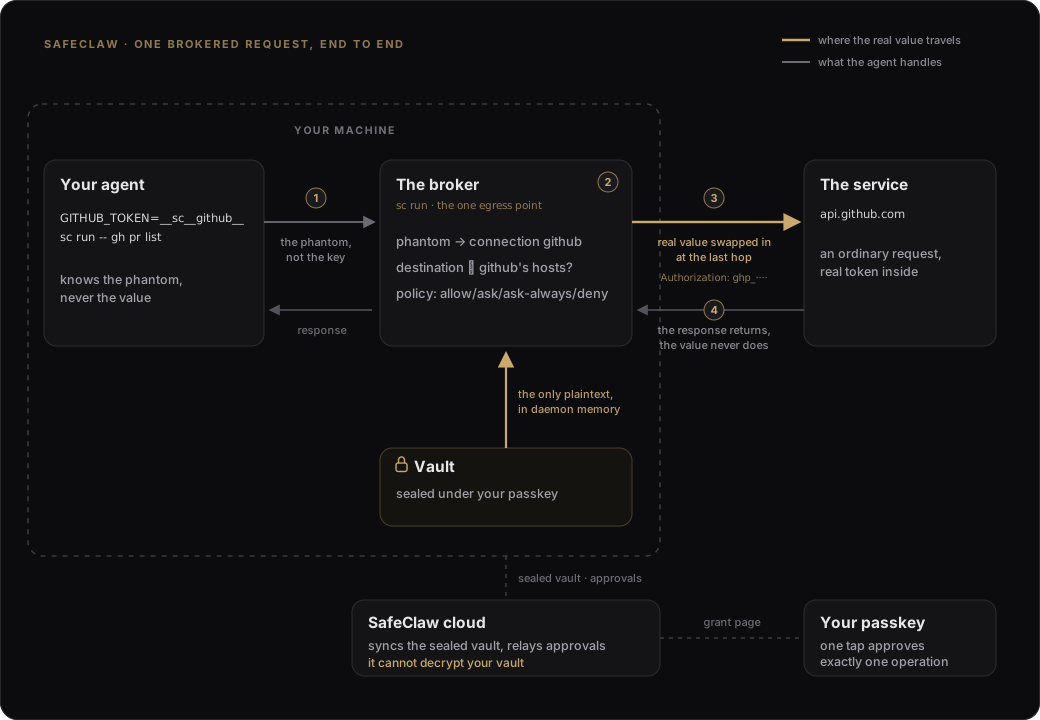
The problem
Agents need your API keys to do real work, and today they get them the worst possible way: pasted into an env file. From that moment the key sits in plaintext inside a process that reads untrusted input all day. One prompt injection, one rogue skill, one over-chatty log line, and the key is gone, along with everything it unlocks.
Rationing what the agent may do doesn't require rationing what it may know. The key never needed to be in the agent at all.
The three moves
1. The phantom. Each connected service gives the agent a placeholder like
__sc__github__ instead of a value. The agent puts it exactly where the
credential would go: an env var, a request header, a config file, a URL path.
The phantom is worthless everywhere except one place.
2. The broker. That place is a local proxy on your machine. Commands
routed through sc run -- egress through it; it resolves the phantom to a
connection, checks the destination against that connection's own hosts,
substitutes the real value at the last hop, and forwards. The response comes
back; the value never does. Traffic you don't route is untouched.
3. The passkey. Every brokered request is policy-checked. Routine calls flow; sensitive ones pause until you approve them with a passkey tap, and one tap authorizes exactly one operation. The same passkey seals the vault itself: no password exists anywhere in the system.
What SafeClaw is not
- Not a machine-wide interceptor. Only
sc runtraffic is brokered; the phantom is the only trigger. - Not cloud custody. The cloud syncs the vault sealed under your passkey and cannot decrypt it. Plaintext exists only in the daemon's memory, on your machine, while unlocked.
- Not an approval treadmill. Policy is a gate, not a nag: reads flow, boundaries refuse loudly, and only defined-sensitive actions ask.
Where to go deeper
Vault for where values live · Connections for how a secret becomes a phantom · Broker for the egress mechanics · Approvals & policy for who decides · Agents for identity and audit · Quickstart to just try it.